

At GTEC, we don’t just adjust sensors; we secure your workforce’s next breath.
In toxic environments, hazardous storage, and confined spaces, the difference between “safe entry” and “fatal exposure” is measured in parts per million (ppm). GTEC provides the traceable, certified accuracy required to prevent toxic gas poisoning, eliminate explosion risks, and maintain absolute compliance with HCIS, OSHA, and international industrial safety regulations across your most critical assets.
The Invisible Danger: The Cost of “Out-of-Tolerance” Sensors
Incorrect or drifted sensor calibrations are silent threats. Electrochemical and catalytic sensors degrade naturally over time due to environmental poisoning, extreme temperatures, and age—often indicating a clean atmosphere when lethal gases are present.
The Scenario:
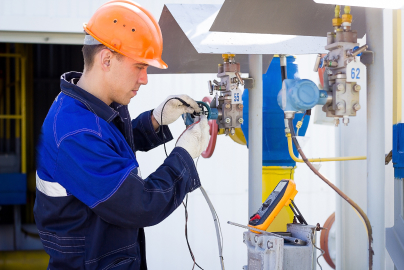
In a Confined Space Entry at a Petrochemical Plant or Wastewater Facility, an automation team relies on a Portable 4-Gas Monitor or a Fixed LEL System to clear an area for hot work. Imagine the sensor has drifted negatively by just 12% due to sensor poisoning or lack of calibration.
Capability List
Capability Matrix
| Category | Included Instruments |
|---|---|
| Portable Gas Detectors | Single-gas and Multi-Gas Monitors (H2S, CO2, O2, LEL), PID (Photoionization) Volatile Organic Compound (VOC) Detectors, Personal Badges, Purge Oxygen Monitors. |
| Fixed Gas Detection Systems | Fixed Gas Transmitters, Wall-mounted Controllers, Electrochemical, Catalytic Bead, Infrared (IR), and Open-Path Gas Detection Arrays |
| Specialized & Legal Safety | Breath Analyzers, Marine Gas Detection Kits, Smoke and Flame Detectors, Bump Testing Stations. |
| Target Gas Species | Hydrogen Sulfide ($H_2S$), Carbon Monoxide ($CO$), Oxygen ($O_2$), Combustible Gases (Methane, Propane, Hexane via LEL), Sulfur Dioxide ($SO_2$), Ammonia ($NH_3$), and Chlorine ($Cl_2$). |
Contact Gtec if You are Looking for a Gas Detector Calibration Company in Saudi Arabia
Dammam
Haradh
Mobile: +966 510347648
Email: riyadh@gtecgulf.com